
Weight Loss Mindset Coaching: There’s One Thing They Don’t Tell You
If you’re searching for a weight loss mindset coach, chances are it’s probably not your first attempt at losing weight.
You’ve done the diets. You’ve tried different workout programs. You’ve even tracked calories and worn the watch.
And maybe some of it worked... for a little while.
But now you’re starting to wonder if the missing piece is mindset.
And that’s a good instinct.
Mindset is such a huge part of losing weight. It’s the lens you see everything through—your perspective on health, on fitness, on what’s possible. Whether you believe you can stick with it, or if this is "just another" go at it.
And when your mindset changes? Everything changes.
Sticking with your plan is easier. Getting motivated to exercise is easier. Losing weight is easier.
But if you’re thinking about working with a coach, there's something you need to know:
So much of the “mindset coaching” that’s out there just walks you through the basics.
Sure, they'll send you a hundred videos to watch. You’ll learn the names of all the limiting beliefs. You might even get some worksheets and a journal to fill out.
And that’s all good. But it’s not enough. Far from it.
Because changing your mindset isn’t just about knowing what the problem is. It’s about actually changing the patterns that keep holding you back.
Let’s walk through some examples—starting with all-or-nothing thinking.
All-or-Nothing Thinking (And How to Break It)
Let’s say you planned to eat healthy today, but you went out for lunch with some coworkers, got caught up in the moment, and ate way more than you planned.
And now you're saying, “Ugh. I screwed up big time!”

So on the way back to work, you stopped by Starbucks, grabbed a venti Mocha Frappuccino with whipped cream and extra chocolate drizzle—because, you know… what the hell.
And from there, the rest of the day spirals.
That’s all-or-nothing thinking.
You made one decision that didn’t line up with your goals, so you say “screw it” and fall right back into your old habits.
The problem with all-or-nothing thinking is that it leads to nothing. Every single time.
What we teach in our weight loss coaching is this: don’t focus on the mistake. Instead, learn from it and move on. The skill to have isn’t perfection—it’s course correction. It’s being able to get back on track regardless of what happened.
If a client tells us they overate at lunch, here’s what we’ll say: “That’s done. What are you having for dinner?”
What happened is important to learn from, but focusing on nailing the next meal is key. Because when you do, now you’ve got a win. And once you get one win, it’s easier to get another. And another.
If you take the wrong exit on the interstate, you don’t throw your hands up and quit the trip, do you? No, you find the next exit, course correct, and keep going.
The same strategy works with weight loss.
And that’s how you break the all-or-nothing cycle.
Not with willpower, but with strategy.
All-or-nothing thinking loses its power when “good enough” becomes enough.
Fear of Success: When the Outcome Is the Problem
You’ve probably heard of fear of failure.
But there’s something bigger that holds people back even more:
Fear of success.
Let’s say you’re running a business and you’re already overwhelmed. The thought of getting more clients or customers feels impossible.

And taking on more clients makes you think, “If I actually succeed at this… won’t that just mean more pressure? More responsibilities? More to juggle? More things I can’t keep up with?”
That’s fear of success. It's the fear of what life will be like when you get what you want.
And it’s not just entrepreneurs who feel it.
In weight loss, it can look like this:
You’re losing weight—but you’re doing it in a way you can’t maintain. You’re skipping the foods you love. You’re working out every day. You’re saying no to everything you enjoy.
It feels like a sprint with no finish line.
So deep down, even if the scale is moving, part of you starts sabotaging your own success. Because you know you can’t keep this up.
And you know what? You're right!
No one can keep up that pace forever. Not you. Not me. Not anyone.
So the plan, and what we do, is to find a plan that not only works—but lasts.
Even if the plan includes breaks. Even if it lets you enjoy things like pizza, if that’s what you like.
What you need is a plan that helps you pause when you need to, or dial it back when you need to, so you can pick up the pace when you’re ready.
Self-Sabotage: When Your Actions Don’t Match Your Goals
So what is self-sabotage?
Self-sabotage is when you say you want something—but act in all the ways that guarantee you'll never get it.
And what’s important to know is that self-sabotage doesn’t happen because you’re lazy or weak or broken. It doesn’t happen because you have some kind of character flaw. It's normal. And it's something we've all done.
Usually, the reason we self-sabotage comes down to avoiding one of two things:
The outcome. Or the process.
Let’s say someone wants to lose weight, but the process feels too hard. They don’t want to plan their meals. They don’t want to prep their food. And they really don’t want to deal with cravings when they get home from work.
So guess what? They don’t.
And even though they say they want to change, they act in ways that guarantee they'll never change.
That's why having a coach is so important.
A coach will help you identify the real barrier, and then take action. Not “all the actions” at once, but the ones you’re willing to take—and actually will take.
So if planning your whole day feels too overwhelming, maybe we just start with the toughest time of day—like that 4 p.m. wave of cravings—and plan for that. That way, you’re not winging it, and there’s a measurable change to tackle.
That one small action becomes a win. And we build from there.
So if the process is what you're avoiding. Then it's the process has to change—so it feels possible instead of paralyzing.
Mindset Coaching Isn’t Just About Knowing More. It’s About Doing.
Insight is important. But insight without action won’t change a dang thing.
What changes your mindset isn’t just understanding it. It’s doing something about it.
You’ve probably heard the phrase, “If you can name it, you can tame it.” Yeah, it's catchy, but it's got a big problem: a lot of people—and even coaches—stop at the naming part.
So you can rattle off all the limiting beliefs in the book: perfectionism, all-or-nothing thinking, fear of success. But that alone doesn’t magically change anything.
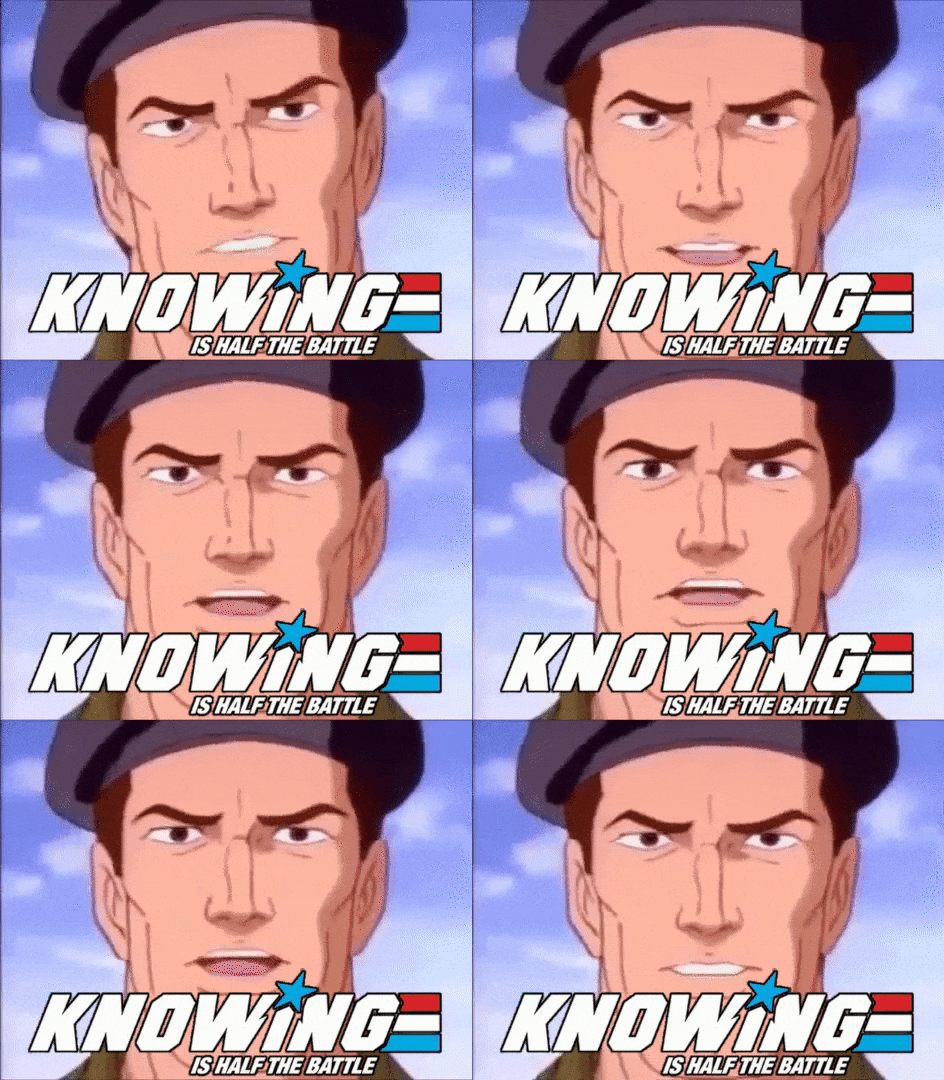
“Knowing is half the battle.” — G.I. Joe
If knowing is half the battle, the other half is action.
And that's where so many mindset coaches fall short. They give you the information, they name the problem, but they don't actually help you follow through day after day until your mindset changes.
In our weight loss coaching program, we help you identify the thoughts and patterns that hold you back.
But we don't end there:
We give you the structure, coaching, and daily accountability to change them.
So if you’re tired of knowing what to do, but still not doing it…
If you want to stop self-sabotaging, change your thinking, and actually follow through…
Here’s what to do next:
Take our free quiz to find out what’s really holding you back.
Or book a quick call with us to talk about how our coaching can help you.